Through the Glass of Time
Duration
10 weeks
Team
6 People
Student team Project
2025
The objective for this project was to create a physical representation of data on a chosen topic from The Hague Municipality Datalab. We received a client brief with the main challenges they were facing as of now and what they needed and wanted us to create.
The Datalab wanted us to increase public access to government data and thus help citizens and city officials make informed decisions as well as encourage citizens to engage with data more. They mostly used maps and data files for the representation of the data however wanted us to make it more accessible, engaging, and useful to the citizens.
Our goal was to create a physical representation of data that makes complex information easy to understand, ensuring the solution is interactive and supports public participation as well as makes the data available at a local level.
The research we did revealed an opportunity to change how people engage with The Hague’s historical data by bridging the gap between data that is archived in a hard-to-reach place and accessibility for the public. The Historic Atlas is full of compelling information but feels passive and hard to access, especially due to its dull format. The Hague City Archives hold valuable content but fail to reach a wider audience or create an emotional connection between the city and its citizens. Technology assessment revealed that interactive technology like projection mapping, sensor integration and other tools like TouchDesigner present creative ways to rejuvenate historical data as dynamic and engaging public experiences. By turning the historical data hidden behind static formats into engaging stories and interactive experiences, history can come alive in public spaces, helping people feel more connected to their city’s past. Field research revealed that people are drawn to eye catching, easily discoverable public installations. Moreover, interactive elements strengthen the potential of emotional engagement and playfulness. In short, the research points out that by activating The Hague’s historical data through interactive, eye-catching, place-based installations that promote curiosity and personal connection, we can transform difficult to reach data into engaging, meaningful experiences for the citizens/visitors of The Hague.
How might we transform historical data into engaging visual narratives that resonate with The Hague's diverse audiences?
Focuses on turning historical facts into story-driven experiences that feel alive and relatable.
Which storytelling formats and visual strategies make history meaningful and memorable for a broad audience.
What interactive design elements (e.g., touchpoints, storytelling techniques) most effectively captivate users in public spaces?
Encourages discovery through interaction, making history feel engaging rather than static or research-based.
Which physical/digital interactions enhance storytelling and capture attention in public environments.
In what ways can public spaces be reimagined to facilitate immersive historical experiences through design?
Blends digital tools with real-world space to create dynamic, seamless storytelling.
Which technologies (e.g. AR, projection) are most effective at delivering historical narratives in situ.
What design strategies can make historical content more accessible and appealing across different demographic groups?
Prioritizes inclusivity to ensure history is told in a way that resonates with all people, not just researchers or enthusiasts.
What content formats, visual languages, or interface styles connect across age, culture, and ability.
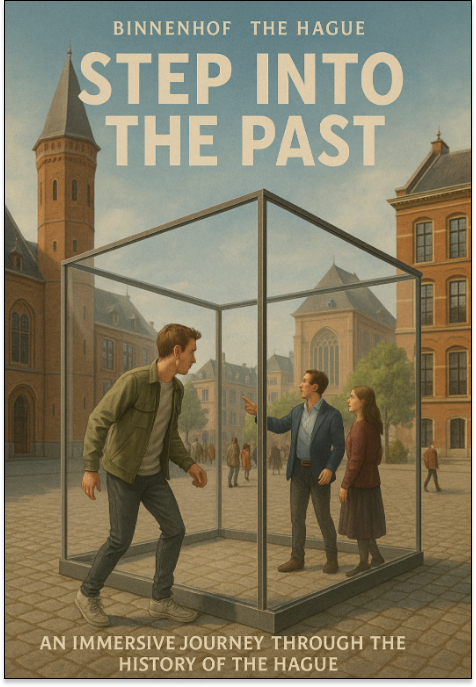
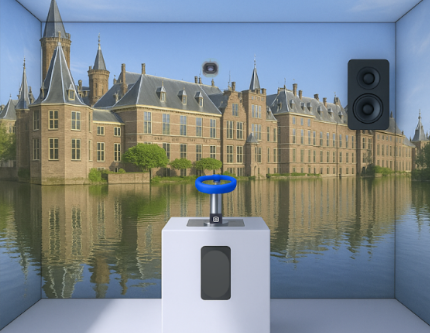
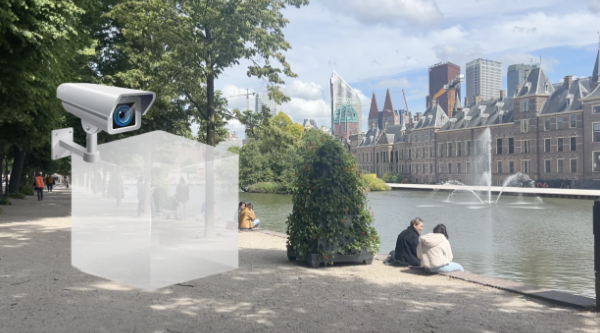
Our final concept is titled “Time Capsule Cube – Step into the Past.” The Time Capsule Cube is a portable, interactive installation: a transparent, soundproof cube that brings historical events and data to life. Inside the cube, users can interact with historical layers of The Hague’s atlas. For example, the 1619 execution of Johan van Oldenbarnevelt, selected different time periods and languages, and became immersed in sound, visuals, and storytelling. Each visitor leaves with a personalized “moment in history” photo, connected to a physical map of the past. This experience creates a powerful, tangible encounter with the city’s evolving geography and collective memory.
Field observations and user interviews showed that people are attracted to installations that feel personal, interactive, and easy to discover. Especially when they relate to familiar places. Users also showed interest in immersive formats and visual storytelling.From these insights, we created early concepts and prototypes. The cube stood out for its potential to create a quiet, immersive space in the middle of a busy city. And the client liked the idea of the cube very much. They gave us ideas like using historical events of Johan van Oldenbarnevelt and sounds from that time. Through two rounds of user testing, one low-fidelity and one with a simulated cube environment, we iterate the design based on real feedback. Key changes included adding a wheel navigation guide, clearer instructions, camera cues, and external signage.